
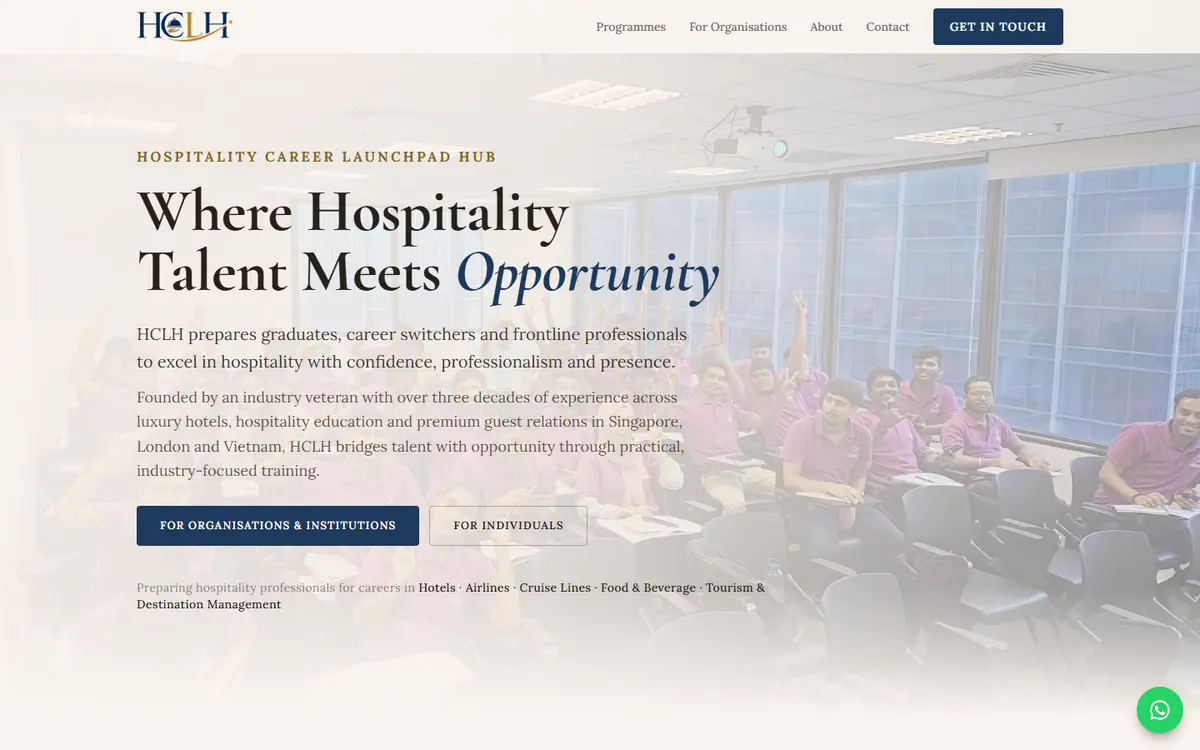
B2B first, without losing the students
She sells to colleges, hotels and other training academies as well as to individuals, and she was explicit from the first conversation that the site had to carry that ratio. The temptation with a training business is to build a student brochure and add a corporate footnote at the bottom. That is backwards when the corporate deal is worth twenty seats.
So the page splits at the top into two paths, with the institutional one given first billing, and it stays split all the way down to the form. Individual programme prices are published. Corporate and institutional pricing is not shown anywhere, because that is how B2B buying actually works: an institution wants a proposal written for their intake, not a price list they can hand to procurement. The enquiry form asks who you are before it asks anything else, so a college and a student never land in the same pile.
Two audiences on one page is not a compromise. You just have to sort them, and the form is where that happens.
The brand changed in the middle of the build
Partway through, HCLA the Academy became HCLH the Hub: new name, new logo, and eventually a new domain. That is the kind of thing that derails a project and turns into an awkward conversation about scope. It got absorbed instead. The new mark was reworked into the navigation lockup, the favicon and the social share card, and the site moved across, at no extra charge.
The address on the card is the address that works
Her site runs on hclh-sg.com, and the www version forwards to it. It had originally been set up the other way round, and I flipped it.
It matters because her NFC card and her printed QR code carry the plain address. If www were the real one, every tap and every scan would bounce through a redirect and land on an address that does not match the card in the person’s hand. It is a small thing that nobody thanks you for, and it is the difference between a card that feels considered and one that does not.
An early bird that expires by itself
Her early-bird rates went up with an end date attached, and the page switches itself back to the regular prices at midnight on 1 October. Nobody has to remember.
That is not a design flourish. Under Singapore’s Consumer Protection (Fair Trading) Act, an early-bird price with no end date is a misleading price representation: if it never expires, it is not a discount, it is just the price. An early bird still running in November is exactly the situation the law is concerned with, and forgetting to change it is not a defence. I held those rates back from publication three times until she gave me a deadline to publish alongside them.
This is the part of the job that has nothing to do with design, and it is the part a marketer notices.
Found by the right people
The page carries structured data naming her registered entity and its UEN, which is what tells Google and an AI assistant that this is a real Singapore business rather than a page about hospitality training. Sitemap, share card, cookieless visitor analytics and the search basics are all in place, and her enquiry form falls back to WhatsApp if email delivery ever fails.