The first version filtered. This one books.
The first version was built for referrals: people a friend had already sent her way, who arrived half persuaded. Its job was to finish that argument and find out who was ready. A fourteen-question diagnostic did the finding out, and the answers landed in her inbox for her to follow up.
The second version is built for people who have never heard of her. It gives them a free way in, a first step with a price on it, and a place to book that step without waiting for anyone to reply.
The first version found out who was ready. The second lets the ready ones book.
Three steps, each a smaller yes
The scorecard is free. Thirty questions, about six minutes, and the results show the moment they finish. Only Ayni receives the answers.
The Review is the first paid step: 90 minutes, 1:1, SGD 180. They complete the scorecard first, so she arrives with a starting map, and they leave with a written report on what is working, what it is costing and what to test next. They pick a slot from her calendar on the page and add their name and how to reach them.
The six-session programme comes after the Review, and only if the Review turns up something worth testing. Nobody is asked to sign up for six sessions from a web page.
The price is on the page now
The first version kept prices off the page, because the conversation did the closing. The new one puts SGD 180 right under the button, with the refund rule beside it: if the first 20 minutes are not useful, they stop there and get their money back. A small, fixed first step with a clear way out is easier to say yes to than an open conversation.
Proof from real weeks
Her page now tells three client stories, names changed, each in the same three parts: what had been working, what it started costing, and what changed. One links to a screenshot of the client's actual performance review.
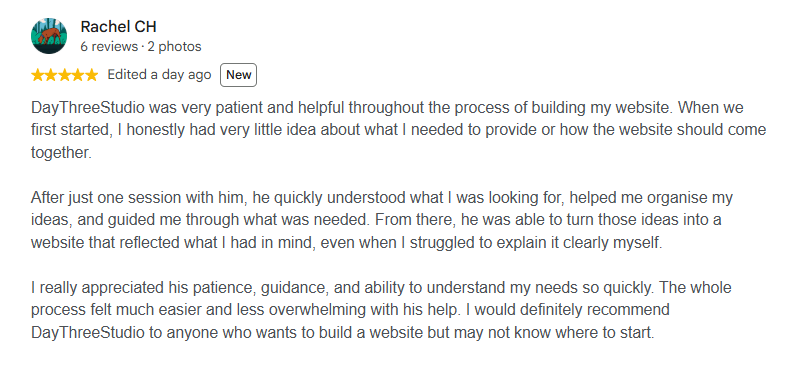
The testimonials are real too. When the first version launched, that section shipped empty: I do not write testimonials, and I do not fill the gap with placeholder quotes that never get swapped out. Real ones arrived afterwards, and each now sits beside a picture of the original message.
She still owns the words
Every word on the page is still hers to change, in her own admin console with a live preview beside it. Layout, colours and spacing stay locked, so nothing she edits can break the page on a phone.
Where it stands
The new page is live at claritycodex.net. Someone who has never met her can go from the headline to a booked Review without a single message back and forth, and anyone not ready yet can take the scorecard first.